
By Quinn Martin | MCSquared Roofing | October 12, 2026
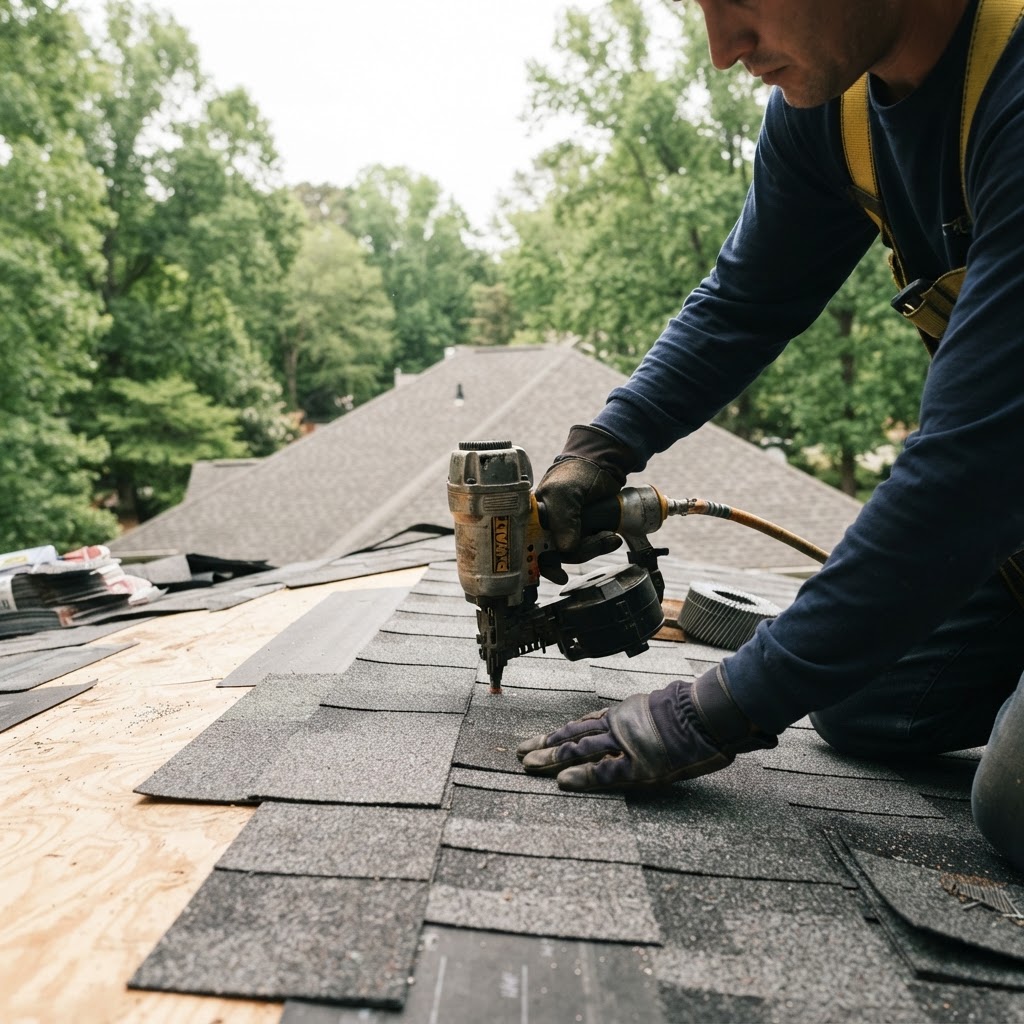
A shingle roof can look finished from the driveway and still have a weak spot hidden beneath the next course. One detail that matters more than most homeowners realize is how the shingles are fastened. Nail placement, nail depth, and the number of nails affect how well shingles stay put when North Carolina gets a windy thunderstorm or the edge of a tropical system.
This is not a reason to worry about every roof or to assume a leak means bad installation. It is a practical reason to know what a proper installation should look like, what warning signs to watch for, and what questions to ask before hiring a roofer.
Why nailing matters
Asphalt shingles overlap, and each course helps protect the one below it. Nails hold the shingles in place while the adhesive strip bonds as the roof warms. If nails are placed too high, too low, or too close to an edge, they may not secure the shingle through the intended nailing area. If a nail is driven too deep, it can cut into the shingle. If it is left proud, the shingle above may not lie flat.
The result can be a roof that is more vulnerable to wind lifting, especially at edges, ridges, and other exposed areas. A single misplaced nail does not automatically mean the whole roof will fail. Installation quality is about the complete system, including the shingle pattern, starter course, underlayment, flashing, ventilation, and the manufacturer’s instructions.
North Carolina weather puts roofs to work
Across Burlington, the Triad, and the Raleigh-Durham area, roofs see hot summers, heavy rain, sudden thunderstorms, and periods of strong wind. Coastal storms can also bring days of rain and gusts far inland. A sound installation helps shingles perform as designed, but no roof is immune to severe weather or falling limbs.
Wind damage does not always show up as a shingle in the yard. Look from the ground for lifted or curled shingle edges, missing tabs, exposed underlayment, or debris in the gutters after a storm. Indoors, a new ceiling stain or damp attic insulation deserves attention. Do not climb onto a wet or steep roof to investigate. A ground-level photo and a professional inspection are safer first steps.
What homeowners can ask before installation
You do not need to supervise every nail. You can ask clear questions before work begins:
- Will the crew follow the shingle manufacturer’s installation instructions for this roof and product?
- How many nails will be used per shingle, and where will they go?
- How will the crew handle roof edges, ridges, valleys, and areas with higher wind exposure?
- What underlayment and starter materials are included in the written scope?
- Who will inspect the work and handle cleanup before the job is considered complete?
A reliable contractor should be able to explain the plan in plain language and show you what is included in the quote. If the answer is all pressure and no specifics, slow down. A roof is a major expense. You deserve to understand the work before you agree to it.
If you suspect a problem
After a storm, document what you can safely see from the ground. Note when the weather occurred, take photos of visible damage, and check the attic only if it is safely accessible. If water is actively coming in, protect belongings and contact a qualified roofer promptly. Avoid making a permanent repair on a wet roof yourself.
A roof inspection should identify what is damaged and what is not. Sometimes a small repair is enough. Sometimes damage is widespread or the roof is near the end of its service life. The right answer depends on the actual roof, not a pitch made from the driveway.
MCSquared Roofing is a family-owned company serving Burlington, the Triad, and Raleigh-Durham. We do not use salespeople. We explain what we find, provide transparent pricing, and let homeowners review their options without pressure. You can start with our online estimate tool, or schedule an inspection below.
Get your instant online roof estimate — no salesperson, ever.
Get My Instant Estimate →Frequently asked questions
Can incorrect shingle nailing cause wind damage?
It can make shingles more vulnerable if fasteners miss the intended nailing zone, are overdriven, or are underdriven. Wind performance also depends on the full roofing system, installation conditions, product instructions, and the severity of the weather.
Can I tell from the ground whether my roof was nailed correctly?
Usually not. Some visible signs, such as lifted or missing shingles, warrant a closer look, but nail placement is generally hidden after installation. A qualified inspection can assess the roof without asking you to climb onto it.
Should I replace my whole roof if a few shingles are missing?
Not necessarily. The cause, extent of damage, roof age, and condition of surrounding shingles determine whether a repair or broader work makes sense. Get the roof assessed before deciding.
What should I do if a storm damages my roof?
Stay off the roof, document visible damage from a safe location, and arrange an inspection. If water is entering the home, protect the interior and seek prompt help.
Schedule an inspection
Pick a time that works for you on our storm inspection calendar, or call 336-988-ROOF.
