
By Quinn Martin | MCSquared Roofing
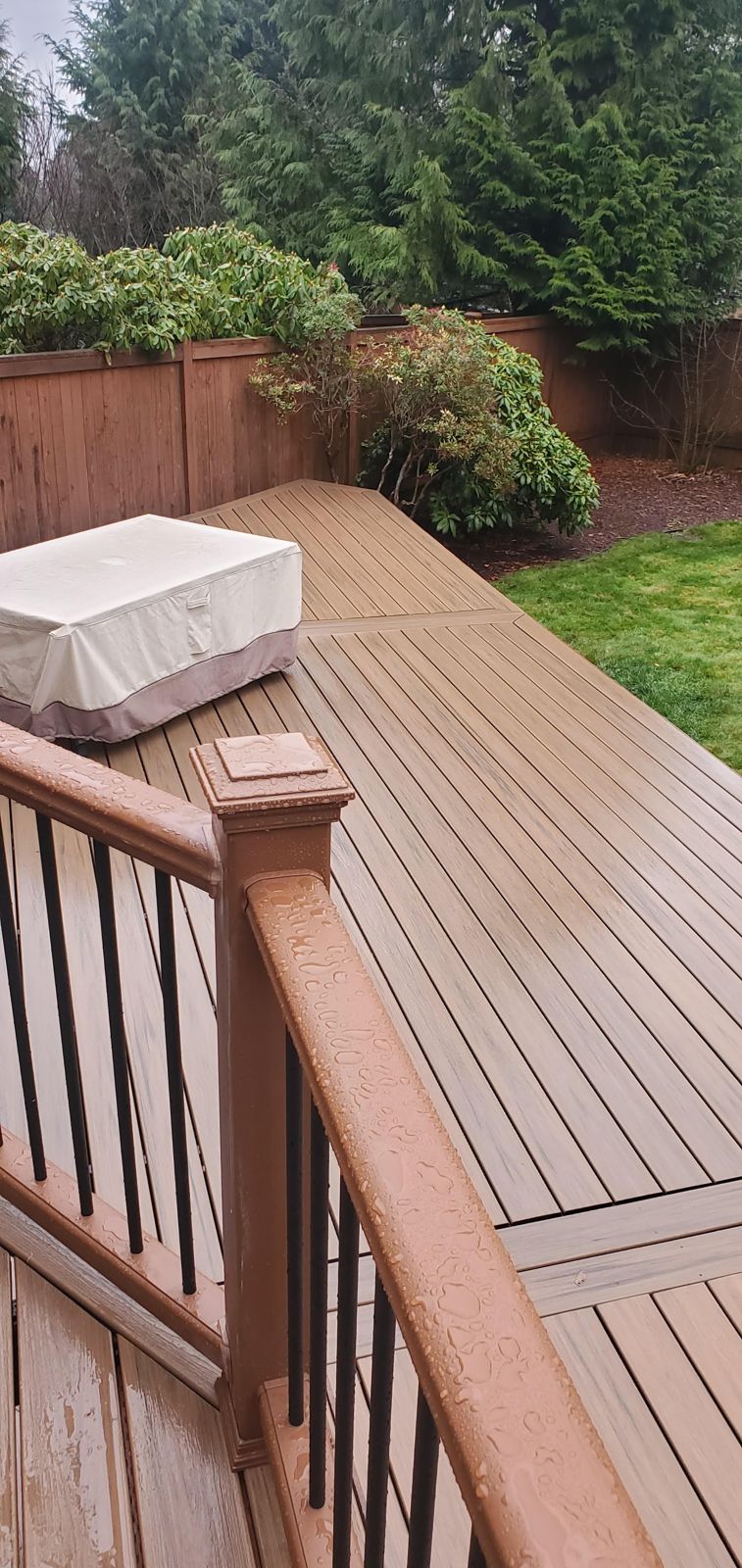
North Carolina winters don’t destroy decks the way Minnesota’s do — but they still take a real toll. Freeze-thaw cycles pry boards, wet leaves hold moisture against the wood for months, and a neglected deck spends December through February slowly turning into a spring repair bill. One Saturday of maintenance before the first freeze saves all of that. Here’s the checklist.
1. Clear the Debris — All of It
Leaves and pine needles are the silent killer of NC decks. They trap moisture against the boards, hold it there, and slowly feed mildew and rot. Sweep the surface, but also clear the gaps between boards — clogged gaps back up water and let it sit on fasteners. Do the corners and anywhere furniture sat all summer.
2. Do the Water Test Before It Gets Cold
Drop some water on the boards. If it beads up, your seal is still working. If it soaks in and darkens the wood, the deck is drinking every rain and ice melt all winter. Resealing needs a stretch of dry days above about 50 degrees, so early fall is the deadline in the Triad — miss it and the deck waits until spring. This one test is the difference between a deck that lasts 10 years and one that lasts 25.
3. Check for Rot Where Water Lives
Take a screwdriver and probe the spots that stay wettest: where the deck meets the house (the ledger board), around posts at ground level, and any board under a gutter drip line. Soft, spongy wood that the screwdriver sinks into means rot, and winter will accelerate it. Caught early it’s a board replacement; ignored until spring it’s a structural conversation.
4. Re-Sink Popped Fasteners
Freeze-thaw works screws and nails loose all winter. Walk the deck and re-tighten or replace anything proud of the surface. This matters double for composite decks — a proud screw head is a snag hazard all winter and a trip hazard by spring.
5. Wash It — Gently
Before the first freeze, give the deck a once-over with mild soap and a soft brush. Skip the pressure washer on wood — it gouges the grain and shortens the seal’s life. Composite cleans up with soap and water; there’s no seal to preserve but mildew still stains it.
6. Set Your Ice Rules Now
NC ice is sneaky — one 30-degree-rain morning turns every deck into a skating rink. Two rules for ice and snow: use a plastic shovel and push along the boards, never across, and use calcium chloride ice melt, not rock salt. Rock salt accelerates fastener corrosion and damages both wood and composite. If you don’t need the deck all winter, honestly, the safest move is letting the ice melt on its own.
7. Store the Furniture and Skip the Nails
Move cushions and fabric furniture inside; hard furniture can stay but elevate or move it occasionally so moisture doesn’t sit trapped underneath. Hanging holiday lights? Use clips, never nails or staples — every puncture is a water entry point in a deck that’s about to spend four months wet.
When Maintenance Turns Up a Bigger Problem
Half the decks we’re asked to look at in March were “fine” in October. If the checklist turns up soft boards, a wobbly rail, or movement in the frame, get it looked at before winter compounds it. Repairing three boards is cheap; rebuilding a rotted ledger is not.
Want a professional opinion on what your deck needs before winter? Get a free online estimate at the MCSquared deck estimator — published pricing from $35–$75 a square foot, photos of your project tell us most of the story, and if a permit is involved we handle the NC deck permit paperwork for you. Material comparison shopping? Start with composite vs. pressure-treated costs.
