
By Quinn Martin | MCSquared Roofing
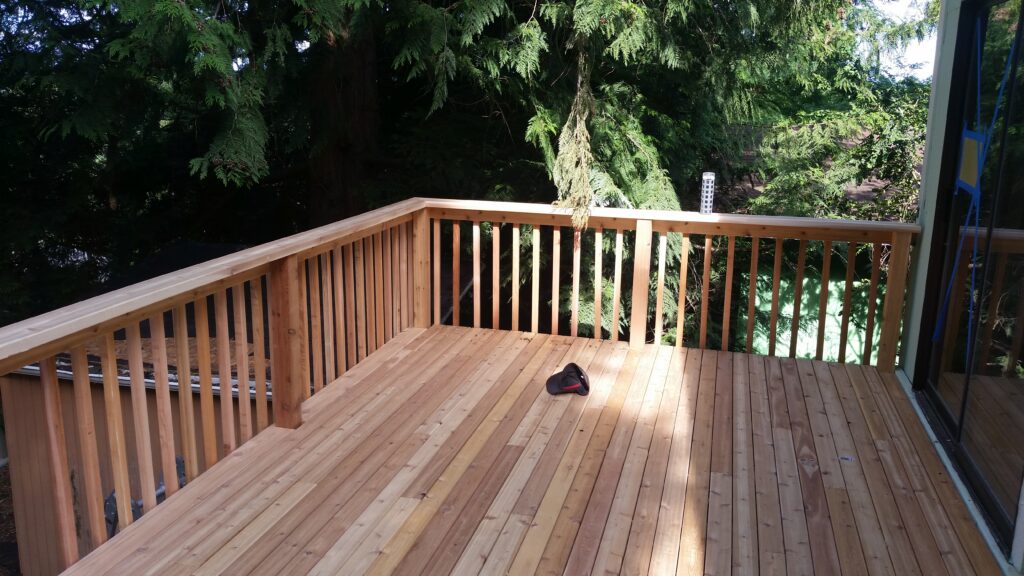
Every deck estimate we run comes down to one question: pressure-treated wood or composite? It’s the biggest cost decision in the whole project, and most of the “guides” out there dodge the actual numbers. So here’s the real math for a North Carolina deck, from a crew that builds both.
The upfront cost, straight up
We publish our installed deck pricing, updated for 2026:
- Pressure-treated ground-level deck: $35–45 per square foot
- Pressure-treated raised deck: $45–55 per square foot
- Composite deck: $60–75 per square foot
- Stair sets: $450–650 pressure-treated, $650–950 composite (up to 5 treads)
- Old deck removal: $8–15 per square foot
On a typical 300-square-foot ground-level deck, that works out to roughly $10,500–13,500 in pressure-treated pine versus $18,000–22,500 in composite. Composite runs about 50–70% more upfront. Anyone who tells you different is selling something.
What pressure-treated gets you
Pressure-treated southern yellow pine is what most Triad decks are built from, and for good reason. It’s strong, it’s familiar, termite treatment is baked in, and it’s the cheapest way to get a real deck under your feet. Stained properly, it looks like a million bucks for years.
The catch is the word “properly.” North Carolina humidity is hard on PT wood. UV grays it, moisture feeds mildew on shaded boards, and the Piedmont’s freeze-thaw cycles work the grain. A PT deck wants cleaning and resealing every year or two, and boards and rails occasionally need replacing over a 15–20 year life. Budget a few hundred dollars and a weekend per year for upkeep if you do it yourself, more if you hire it out.
What composite gets you
Modern capped composite isn’t the shiny plastic you remember from 2005. Today’s boards have a capstock shell that resists fading, staining, and mold, with a 25–30 year manufacturer warranty on most lines. No sealing, no staining, no splinters. You sweep it, maybe hit it with a hose. That’s the whole maintenance plan.
Two honest caveats for NC summers: composite holds heat more than wood, so barefoot July afternoons on a dark-colored board can get toasty — lighter colors and shaded exposures help. And composite doesn’t have wood’s rigid structure, so the framing underneath matters more, not less. We still frame with pressure-treated lumber either way; composite goes on top of wood, it doesn’t replace the bones.
The 10-year math
Here’s the comparison homeowners actually care about. Take that 300-square-foot deck and look out a decade:
- PT at ~$12,000 installed, plus roughly $2,500–4,000 in cleaning, sealing, and board replacement over 10 years, and you’re still mid-life on the wood
- Composite at ~$20,000 installed, plus roughly $0 in maintenance, with 15–20 years of warranty still on the clock
Composite usually breaks even around years 8–12, then pulls ahead the longer you stay in the house. If you’re building a small ground-level deck and might move in five years, PT is the rational buy. If you’re building a big raised deck you plan to keep for 15+, composite pays you back in weekends not spent on a ladder with a stain sprayer.
The hybrid move nobody mentions
It’s not all-or-nothing. One of the smartest builds we do in Burlington and Greensboro is a pressure-treated deck with composite rail caps or composite railing — the structure stays affordable, and the parts you touch and look at every day stay maintenance-free. It adds a modest amount to the bill and cuts your staining time nearly in half.
That’s the kind of call you can make after seeing real numbers, not during a sales pitch. We don’t do sales pitches.
How to get your actual number
Ballpark ranges are fine; your deck isn’t a range. Run the instant deck estimator from your phone and get a real figure in a couple minutes — no salesperson, no in-home visit, no “let me talk to my manager.” Full pricing details live on our deck construction page, and you can see finished builds in the deck gallery.
The bottom line
Pressure-treated is the best dollar-per-square-foot deck in North Carolina and a great deck if you’ll maintain it. Composite costs more up front and almost nothing after. If you plan to stay, composite usually wins the decade. If you’re watching this year’s budget or selling soon, PT wins it. Either way, we build both, we quote both honestly, and the choice is yours — not a commission’s.
Want to talk it through? Schedule a quick call or just call 336-988-7663. We keep it simple.
