
By Quinn Martin | MCSquared Roofing
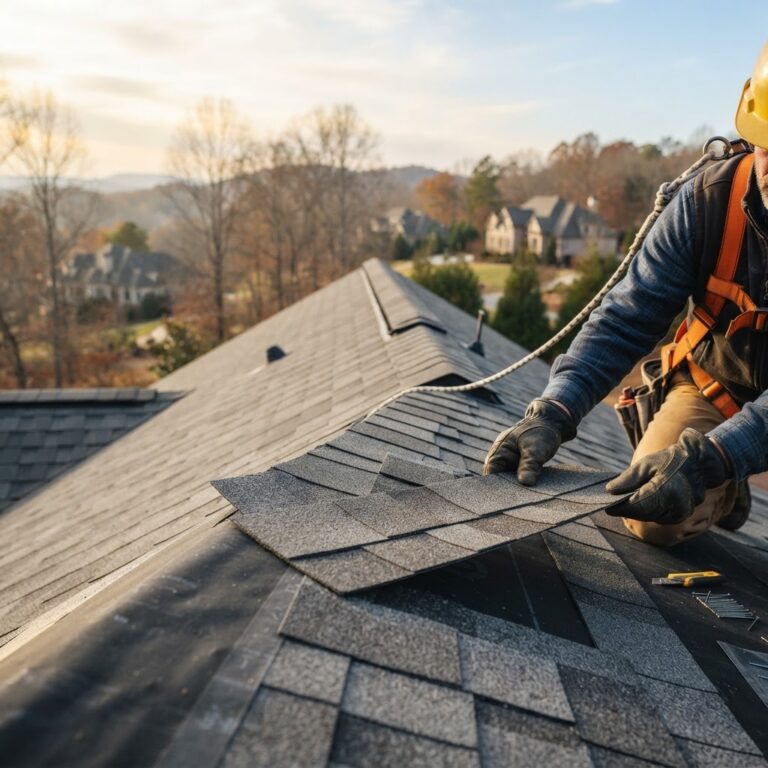
Cold weather doesn’t automatically put a roof replacement on hold. In North Carolina, the right answer depends on the day’s conditions, the roofing material, and whether the crew is prepared to work within the manufacturer’s instructions.
A lot of homeowners assume roofing season ends when the leaves are down. That’s understandable: nobody wants a half-open roof during a cold rain. But winter in Burlington, the Triad, and the Raleigh-Durham area isn’t one long freeze. We get mild stretches, cold snaps, rain, wind, and the occasional icy morning. Some days are workable. Some aren’t.
The question isn’t simply, “Can a roofer install shingles in winter?” It’s, “Can this roof be installed safely and correctly under today’s conditions?” Here’s what matters.
Cold weather changes how shingles behave
Asphalt shingles are less flexible when they’re cold. They can be stiffer to handle, and bending or forcing them around a detail in low temperatures can increase the chance of damage. The adhesive strip that helps neighboring shingles seal is also activated by warmth. In cool weather, that bond can take longer to form than it would on a warm spring day.
That doesn’t mean a winter roof is destined to fail. It means the crew should follow the shingle maker’s installation requirements, handle bundles carefully, use the specified fastening pattern, and pay attention to the forecast. Depending on the product and conditions, extra care may be needed to keep shingles aligned and secure until the seal has had a chance to bond.
North Carolina winter weather is changeable
In the Piedmont, one week can bring a sunny afternoon in the 60s and a frosty start a few mornings later. A workable daytime window can disappear if rain moves in, wind picks up, or the roof is slick with frost. A responsible roofer doesn’t treat the calendar as permission to work regardless of conditions.
Rain and ice are obvious concerns, but wind matters too. Loose materials and debris are a safety issue, and open decking needs to be protected if weather changes. The crew needs a clear plan for tear-off, dry-in, and cleanup, not just a plan to get shingles on the house.
When winter replacement can make sense
If a roof is near the end of its life but not actively failing, a mild, dry stretch may offer a perfectly reasonable installation window. Winter scheduling can also be practical when your home needs attention now and waiting months would leave you worrying through every storm.
If there’s an active leak, don’t wait for an ideal season. Get the roof inspected. The immediate need may be a targeted repair or temporary protection while a full replacement is scheduled for safe conditions. The right call depends on what the inspection finds, not on a blanket promise that every roof must be replaced immediately.
What to ask before the crew starts
- Will the forecast and roof surface be safe for the planned work?
- What does the shingle manufacturer require for cold-weather installation?
- How will the crew protect exposed decking if the weather turns?
- How will you confirm the shingles are properly fastened and aligned?
- What happens if conditions change during the job?
You shouldn’t need a roofing degree to get a straight answer. If someone says temperature never matters, or pressures you to sign before explaining the plan, slow the conversation down.
Winter isn’t a reason to rush, or to wait blindly
The best time to replace a roof is when the roof needs it and the conditions allow the work to be done correctly. A dependable contractor will tell you when the weather is suitable, when it isn’t, and what to do in the meantime. That’s more useful than a hard sell or an automatic “call us in spring.”
At MCSquared Roofing, there are no salespeople making house calls. You can start with an online estimate, see transparent pricing, and decide whether you want to move forward. We serve Burlington, the Triad, and Raleigh-Durham. If you’re unsure whether a leak can wait, schedule an inspection and get the roof looked at.
Need a roof checked after a storm or leak? Schedule an inspection, or get an online estimate. No pressure. Just a clear look at what your roof needs.
Frequently asked questions
Can a roof be replaced in winter in North Carolina?
Often, yes. Many winter days in the Piedmont are workable, but the crew must account for temperature, wind, precipitation, roof condition, and manufacturer instructions.
Do asphalt shingles seal properly in cold weather?
Self-sealing strips may take longer to bond in cool weather. A qualified roofer follows the manufacturer’s cold-weather guidance and checks that shingles are properly positioned and fastened.
Is winter a bad time to replace a roof?
Not automatically. Dry, safe conditions may be suitable. Rain, ice, high wind, or temperatures outside product guidance can make a particular day unsuitable.
Should I wait until spring if my roof is leaking?
No. Arrange an inspection promptly. A roofer can assess whether temporary protection or repair is appropriate, or whether replacement can safely proceed.
