If a roof is going to leak, homeowners usually notice the water inside the house first. The actual problem often started outside, at a small piece of metal most people never think about: roof flashing.
Flashing directs water away from seams, corners, walls, chimneys, skylights, and other places where the roof changes direction. It is not the part homeowners usually ask about when they are comparing shingles, but it is one of the parts that decides whether a roof stays dry.
In North Carolina, flashing has to deal with heavy summer downpours, tropical-storm remnants, strong wind, humidity, temperature swings, and occasional ice. When flashing is missing, loose, rusted, or installed incorrectly, water can work its way into the roof deck and framing long before a ceiling stain appears.
## Where roof flashing matters most
The highest-risk areas are the places where two building materials meet or where water naturally funnels downhill.
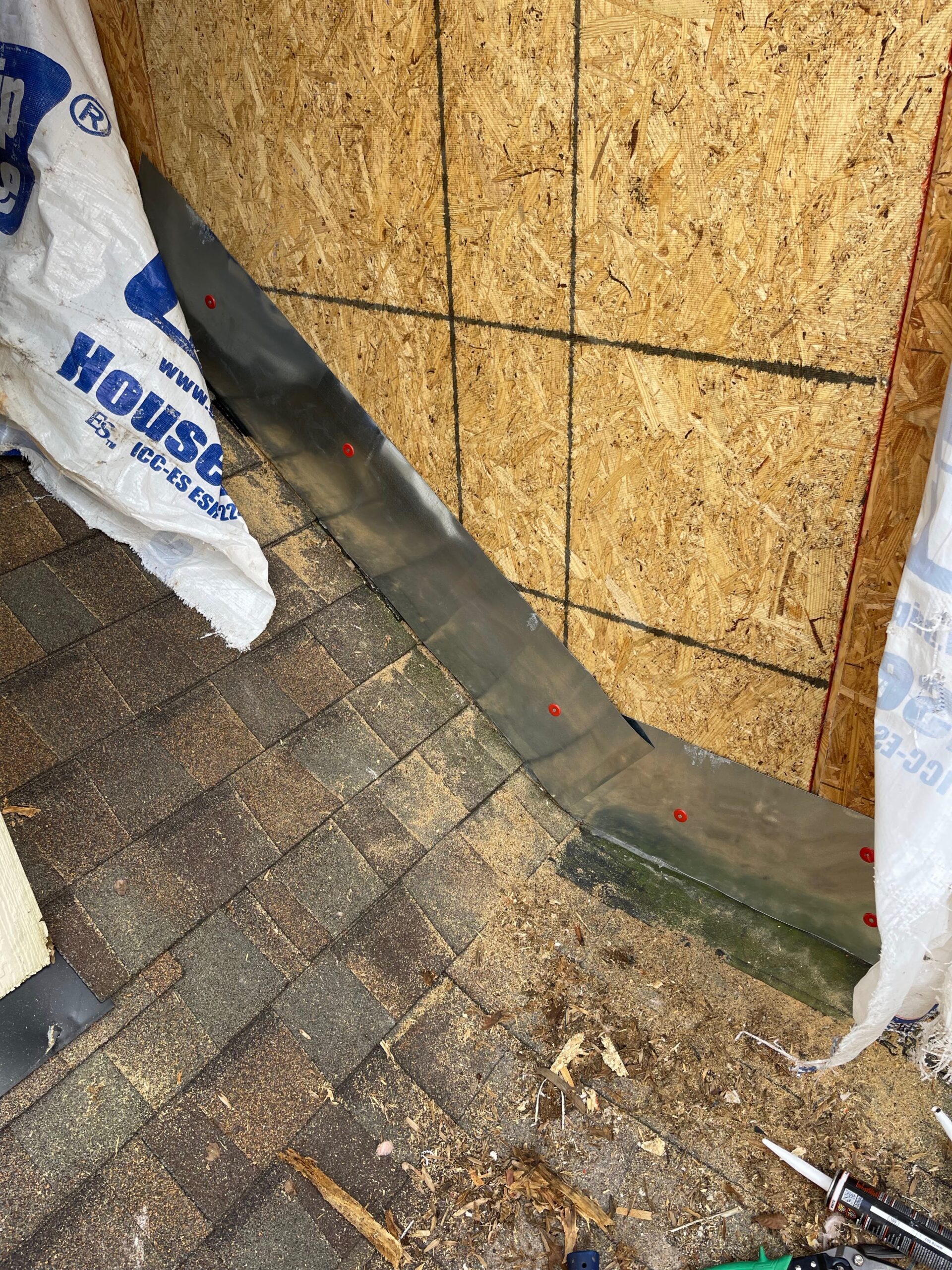
Real wall flashing MCSquared installed on a Burlington, NC job
Chimneys are a common trouble spot. A proper chimney flashing system usually includes step flashing along the sides, counterflashing set into the masonry, and carefully sealed transitions at the upper and lower corners. Smearing caulk over an old leak is not the same as rebuilding the flashing system.
Wall intersections need attention too. Step flashing should be woven with the shingles along a sidewall, while headwall flashing protects the upper edge where the roof meets a wall. If siding or brickwork was installed over the flashing, repairs can become harder and more expensive.
Valleys, skylights, plumbing penetrations, and roof-to-porch connections also deserve a close look. These areas collect water or interrupt the normal shingle pattern. A few missing pieces can create a leak path that is difficult to trace from inside the attic.
## Why North Carolina weather exposes flashing problems
Our weather does not have to be dramatic to damage a roof. A long period of heat and humidity can make sealants brittle or cause materials to expand and contract. Wind can lift an exposed edge or push rain sideways under a loose piece of metal. During a hard storm, branches and airborne debris can bend flashing even when the shingles look mostly intact.
Heavy rain is especially good at finding shortcuts. Water can travel behind siding, under shingles, or along roof decking before it drops into the attic. That is why the visible stain is not always directly below the failed flashing.
A roof can look fine from the ground and still have a flashing problem. Binoculars may show lifted metal or missing sealant, but a proper inspection often requires checking the attic, fasteners, transitions, and surrounding materials.
## Signs that flashing needs attention
Call for an inspection if you notice any of these signs:
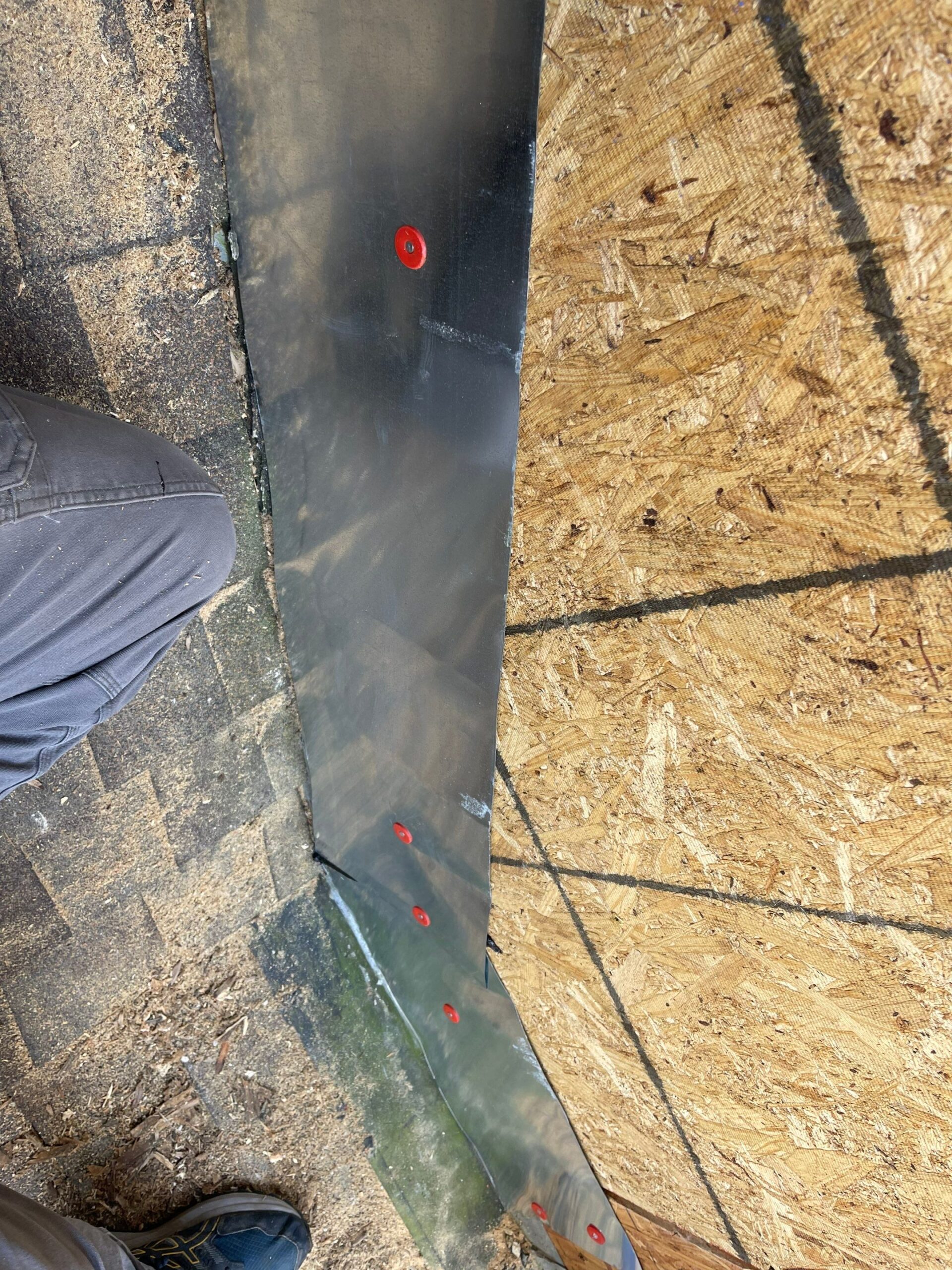
Correct fastener spacing on flashing, one of the details we check on every job
– A brown or yellow ceiling stain near a chimney, wall, skylight, or porch
– Damp insulation, dark roof decking, or a musty attic smell
– Rust, gaps, lifted edges, or cracked sealant around roof penetrations
– Water appearing only during wind-driven rain
– Repeated leaks after someone has already “sealed” the area
– Loose siding, damaged masonry joints, or deteriorated trim near the roofline
– Shingles that are missing or damaged around a chimney or valley
Do not assume a small stain means a small repair. The longer water stays in the roof system, the greater the chance of damaged decking, framing, insulation, drywall, or mold growth.
## Repair or replacement?
Flashing can often be repaired when the surrounding roof and materials are in good shape. A repair may involve replacing a short section, correcting a transition, installing new step flashing, or rebuilding the seal around a penetration.
Replacement makes more sense when the flashing is part of a larger roof failure, has been covered with layers of incompatible patches, or cannot be accessed without disturbing surrounding shingles or siding. If the roof is near the end of its service life, replacing the flashing during a roof replacement is usually more practical than repairing the same area twice.
The right answer depends on what is actually failing. A good contractor should show you the problem, explain the repair, and separate necessary work from optional upgrades. You should not need to sign a same-day contract just to get an honest assessment.
## How MCSquared approaches flashing problems
At MCSquared Roofing, we do not send salespeople to pressure homeowners into a full replacement. Quinn Martin personally oversees the work, and homeowners can start with an online estimate at myroofer.com/estimate before scheduling an inspection.
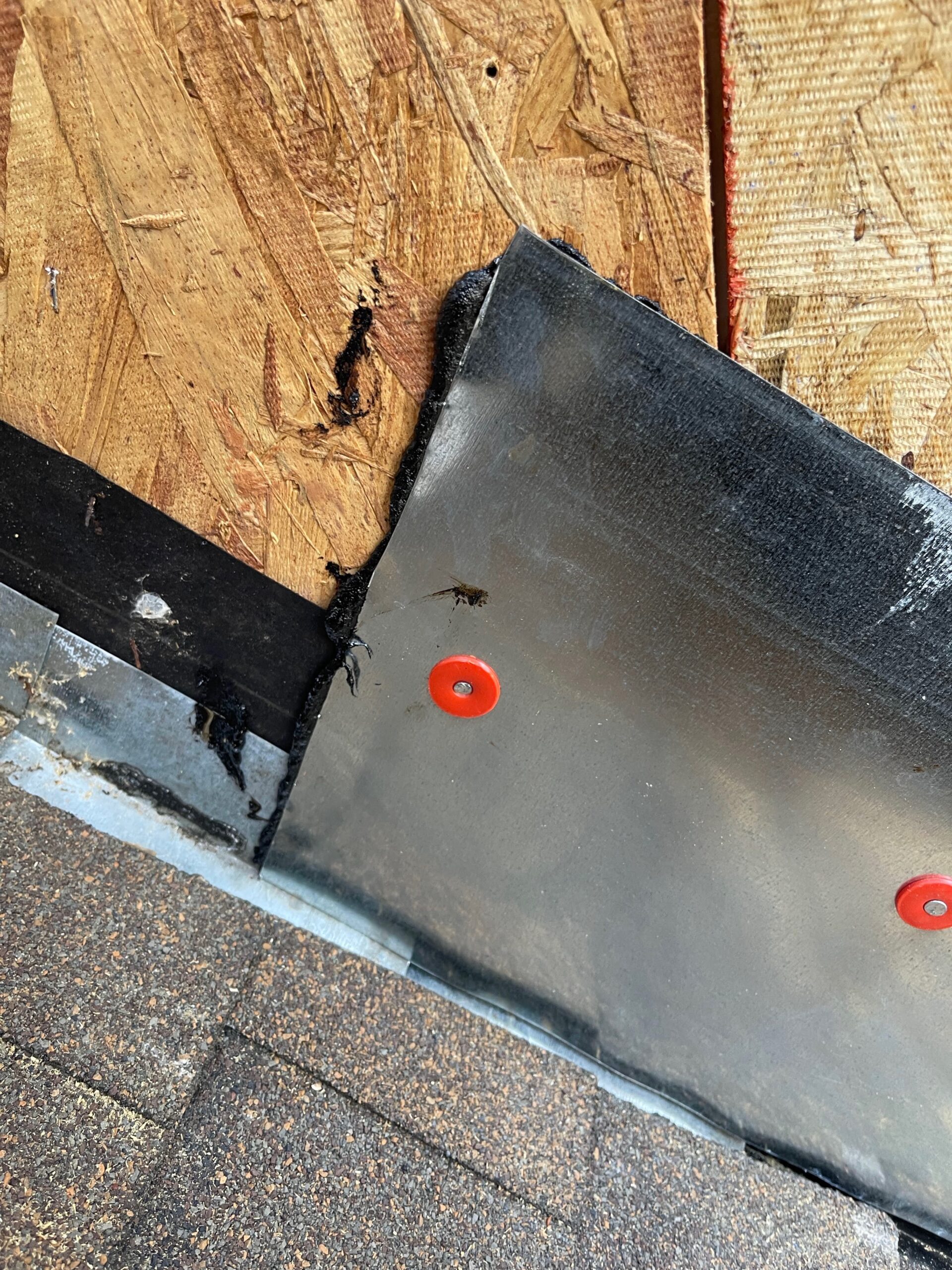
A properly cut and sealed flashing corner, MCSquared job in the Triad
Our pricing is transparent, our recommendations are based on the condition of the roof, and we will tell you when a targeted repair is enough. If a storm may have caused damage, schedule an inspection through our storm inspection calendar. We serve Burlington, the Triad, and the Raleigh-Durham area from our home base at 1416 Whites Kennel Rd, Burlington, NC.
The point of flashing is simple: move water away from vulnerable seams. The best time to find a flashing problem is before water reaches the living space. A quick inspection now can prevent a much bigger repair later.

 GIVE US A CALL