
By Quinn Martin | MCSquared Roofing
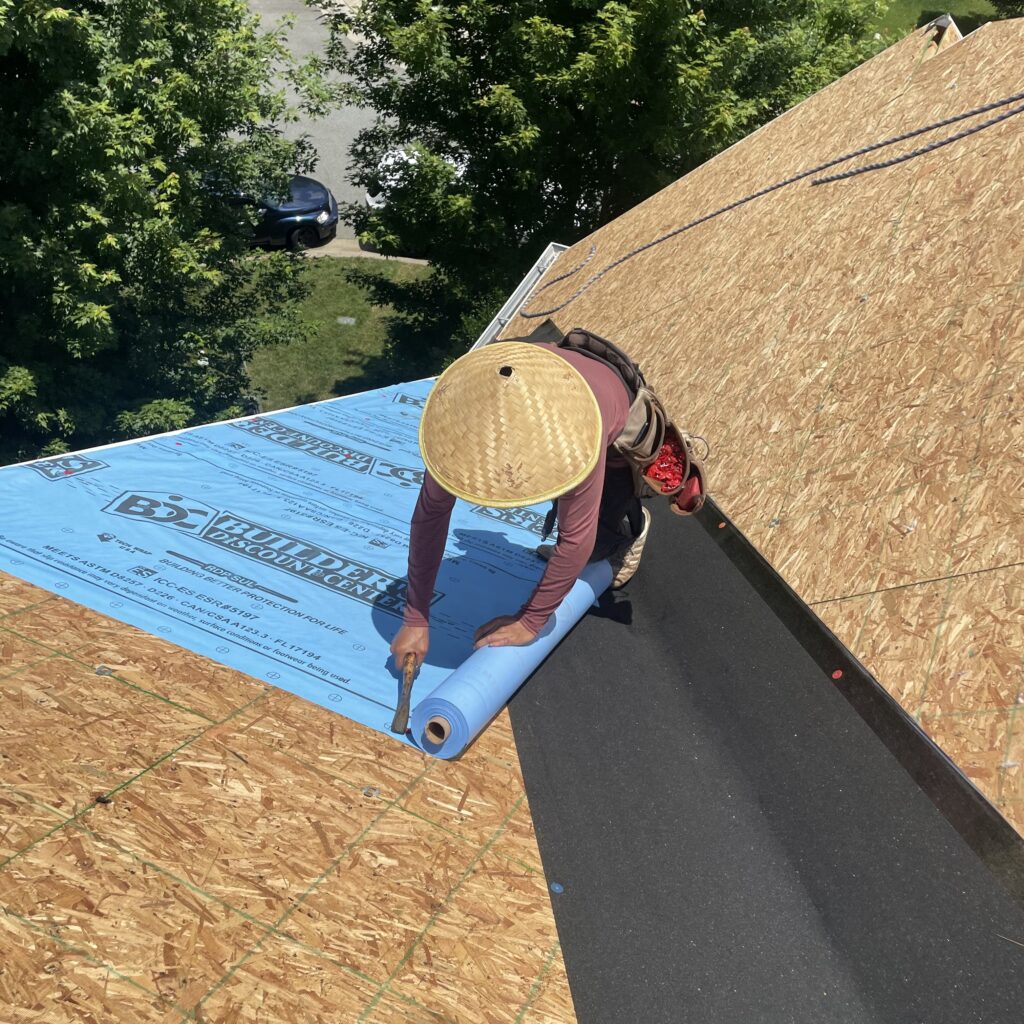
When homeowners compare roof replacement estimates, they usually look at shingle color, warranty, and total price. The layer directly under those shingles rarely gets a mention. That’s a mistake. Underlayment is the backup water barrier between your roof deck and the weather, and in North Carolina, where heavy rain and wind-driven storms are part of the deal, it deserves a straight answer.
It isn’t a magic shield, and it won’t fix bad flashing or careless installation. But the right underlayment, installed correctly, gives your roof deck another line of defense if water gets past the shingles. Here’s what matters, without the sales pitch.
What roof underlayment actually does
Shingles are the roof’s first layer of defense, but they’re not a waterproof membrane. Wind can drive rain beneath shingle edges, and water can travel around valleys, penetrations, or damaged areas. Underlayment lies over the roof sheathing and beneath the shingles. It helps protect the wood deck during installation and provides a secondary barrier against moisture.
That second job has limits. Underlayment is not a substitute for sound shingles, properly installed flashing, or a roof system designed to shed water. If a leak starts around a chimney or plumbing vent, the flashing detail is often the first thing to investigate, not simply the underlayment.
Felt versus synthetic: what’s the difference?
Traditional asphalt-saturated felt has been used for decades. It can do its job, but it is more vulnerable to tearing, wrinkling, and moisture exposure while the roof is being installed. Those wrinkles matter because they can telegraph through shingles or create uneven areas. Felt can also be less forgiving if it sits exposed to weather for too long.
Synthetic underlayment is made from engineered materials and is typically lighter and stronger against tearing. Many products have better traction for installers and tolerate exposure during construction better than felt. That doesn’t mean every synthetic product is identical, or that the most expensive roll automatically makes a better roof. Product specs, the roof design, and correct fastening all matter.
Ask what product is included by name, not just whether the estimate says “premium underlayment.” Then ask how it will be fastened and how long it can safely remain exposed. A clear answer is more useful than a shiny adjective.
Where ice-and-water protection belongs in North Carolina
Self-adhered ice-and-water barrier is a sticky waterproof membrane used in vulnerable areas, often at eaves, valleys, and around certain roof penetrations. It can help protect against water backup and wind-driven rain. The name makes it sound like a must-have blanket for every roof, but coverage should match the roof and the applicable code, not a one-size-fits-all sales script.
North Carolina isn’t one uniform climate. A home in the Triad sees different winter exposure from a mountain home, and a low-slope section or complicated valley has different risks from a simple, steep gable. Ice events are less routine in much of the state than in colder regions, but occasional freeze-thaw weather can still make vulnerable details worth discussing. Local code requirements and the manufacturer’s instructions should guide the installation.
Don’t assume “ice-and-water shield everywhere” is automatically better. Extra membrane can add cost, and the roof assembly needs to be handled correctly. Ask which locations are being protected and why. Valleys, eaves, penetrations, and transitions deserve specific attention in the scope.
The details that matter more than the label
- Roof deck condition: Soft, delaminated, or damaged sheathing needs to be addressed. New underlayment over compromised wood doesn’t solve the underlying problem.
- Valleys and transitions: These collect and redirect water. Ask how the estimate treats valleys and roof-to-wall intersections.
- Flashing: Chimneys, vents, skylights, and walls need correctly integrated flashing. Underlayment can’t rescue a poorly detailed joint.
- Fastening and laps: Underlayment must be installed with the right overlaps and fasteners for the product and roof conditions. Loose edges or incorrect laps can undermine the system.
- Exposure time: If weather delays the shingle installation, the product’s exposure limits matter. Ask how the crew protects the roof if rain is forecast.
Questions to ask before you sign
You don’t need to become a roofing inspector. You do deserve to know what’s going on your house. Ask: What is the underlayment product and manufacturer? Where will self-adhered membrane be installed? Are valley and flashing details included? What happens if the decking is damaged, and how is that priced? How will the crew protect the open roof if weather changes?
Compare written scopes, not just totals. One estimate may include named synthetic underlayment and specific valley protection while another uses vague language. If the details aren’t written down, you can’t make a fair comparison.
A clear estimate beats a pressure pitch
At MCSquared Roofing, we don’t send salespeople to your home to work a closing script. Homeowners can start with an online estimate, review the numbers, and decide what questions they want answered. We serve Burlington, the Triad, and the Raleigh-Durham area, and we believe a roof quote should spell out the work instead of hiding it behind jargon.
Get started with the online roof estimate tool. If you want someone to look at a concern in person, schedule a call. No pressure, just a clear look at what your roof needs.
Frequently asked questions
Does every North Carolina roof need ice-and-water shield?
Not necessarily across the entire roof. Appropriate locations depend on roof design, local code, manufacturer instructions, and exposure. Ask for the planned locations in writing.
Is synthetic underlayment always better than felt?
Synthetic products generally offer stronger tear resistance and better job-site durability, but products vary. Proper installation and a complete roof system matter as much as the category.
Can underlayment stop a roof leak by itself?
It can provide a secondary barrier, but it is not a permanent repair or a substitute for shingles, flashing, and correct water-shedding details.
What should I check in a roofing estimate?
Look for the underlayment product, protected areas, valley and flashing scope, decking repair terms, and how weather delays will be handled.
