
By Quinn Martin | MCSquared Roofing
A roof leak does not always start with a missing shingle. Sometimes water gets in around a pipe only a few inches wide.
The rubber or metal fitting around a plumbing vent pipe is called a roof boot, or pipe flashing. It seals the opening where the pipe passes through the roof. When that seal cracks, lifts, or pulls loose, rain can work its way into the attic and ceiling. The shingles around it may still look fine from the ground.
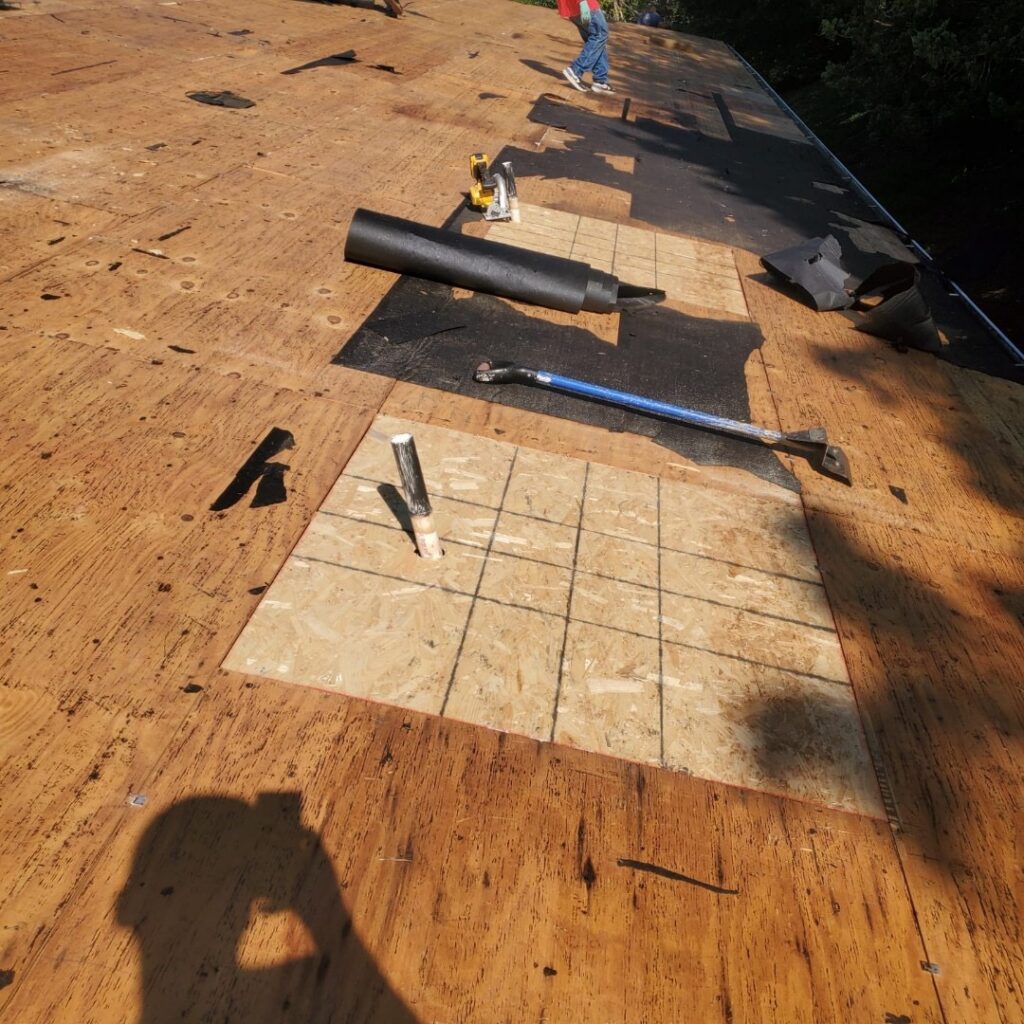
In North Carolina, roof boots take a beating from summer heat, strong sun, heavy rain, and the occasional wind-driven storm. Here is what homeowners can look for, and what to do if they suspect a problem. (The photo above is from one of our jobs: the decking around a vent pipe had to be replaced after a failed boot let water in.)
What a roof vent boot does
Plumbing vents extend through the roof to let air into the drain system and carry sewer gases safely outside. The boot seals the gap between the pipe and the roof surface. Depending on the roof, it may have a rubber collar, a metal base, or both.
The boot is a small detail, but it is part of the roof’s water-shedding system. If its seal fails, water can travel along the pipe or roof deck and show up somewhere other than directly below the opening. A ceiling stain may appear several feet away from the actual entry point.
Why roof boots wear out faster in North Carolina
Rubber collars expand and contract as temperatures change. Months of summer sun and hot roof temperatures can dry them out, while storms and seasonal temperature swings keep working the material. The rubber may split around the pipe, curl away from it, or become brittle.
The base can also be a problem. Fasteners may loosen, the flashing can be installed poorly, or an older repair may rely on sealant instead of a properly fitted boot. Sealant has a limited life and is not a substitute for sound flashing. A boot can also be damaged by foot traffic or by someone working nearby.
Age alone does not prove that a boot is leaking. The condition of the material, the installation, and the surrounding shingles all matter.
Signs to watch for inside and outside
From inside, look for a new water mark on a ceiling or wall, damp insulation, musty odor, or moisture around the plumbing vent pipe in the attic. Check after heavy rain, but do not touch wet electrical components or step on ceiling drywall. If you are unsure about attic access, leave the inspection to a professional.
From the ground, you may be able to spot a pipe with a visibly cracked collar, a boot that looks lifted, or shingles that appear disturbed around the penetration. Binoculars can help. Do not climb onto a wet or steep roof to get a closer look. Roof falls are a far bigger problem than a small leak.
A ceiling stain is a clue, not a diagnosis. Water can travel along rafters and sheathing before it becomes visible indoors. The source should be confirmed before anyone starts replacing materials.
What to do if you suspect a leak
Take a few photos of the interior stain and note when you first saw it and whether it gets worse during rain. If it is safe, place a container under an active drip and move belongings out of the way. Avoid poking the ceiling or applying caulk from inside. That does not fix the roof opening and can make the eventual repair harder to assess.
Have the roof and attic checked to confirm whether the boot is the source. A proper repair may mean replacing the boot and correcting the surrounding flashing or shingles. If the boot is sound, the inspection should continue to nearby roof details rather than assuming the first visible spot is the cause.
After a storm, document what you can see and arrange an inspection if there is active leaking or visible damage. Do not let someone pressure you into a full replacement based on a quick glance. Ask what failed, where the water is entering, and what repair is needed. A clear explanation should match the evidence.
Repair or replacement?
A failed boot is often a localized repair, but the right scope depends on the roof’s condition and how the flashing was installed. If shingles around it are brittle or damaged, the repair may need to include those materials. If several penetrations or other roof areas are failing, it may be worth comparing the repair cost with the roof’s overall condition.
There is no honest one-price answer without looking at the roof. The goal is to identify the leak, fix the actual failure, and explain any related work before it is done.
A practical check for Burlington-area homeowners
When you are looking over your home after a stretch of hot weather or a strong storm, add roof penetrations to the list: plumbing vents, bathroom exhaust vents, chimneys, and skylights. These details interrupt the roof surface and depend on properly installed flashing to keep water out.
MCSquared Roofing is a family-owned North Carolina roofing company serving Burlington, the Triad, and the Raleigh-Durham area. We do not use salespeople. Homeowners can start with an online estimate, see transparent pricing, and ask questions without a high-pressure pitch.
If you have a ceiling stain or suspect a roof vent boot leak, start an online estimate at myroofer.com/instant-estimate/. For an inspection, use our online schedule page or call 336-988-ROOF. A roof leak is easier to address when the source is found early, but the repair should still be based on what the roof actually needs.
Frequently asked questions
How can I tell if a roof vent boot is leaking?
Look for a cracked or lifted collar around the pipe, moisture in the attic, or a new ceiling stain. Those signs can point to a leak, but the source should be confirmed because water can travel before it appears indoors.
Do roof vent boots need to be replaced when a roof is replaced?
They should be inspected as part of the roofing work. If a boot is cracked, brittle, poorly fitted, or incompatible with the new roof details, replacing it is generally the sound choice. The roofer should explain what is being replaced and why.
Can I seal a leaking roof boot with caulk?
Caulk may be used as part of a specific repair, but smearing sealant over a damaged or incorrectly installed boot is not a dependable long-term fix. The boot and surrounding flashing need to be evaluated.
Can I inspect the roof boot myself?
You can look from the ground with binoculars and check the attic only if access is safe. Do not climb onto a wet, steep, or unfamiliar roof. A professional can inspect the boot and nearby roof materials safely.
