
By Quinn Martin | MCSquared Roofing
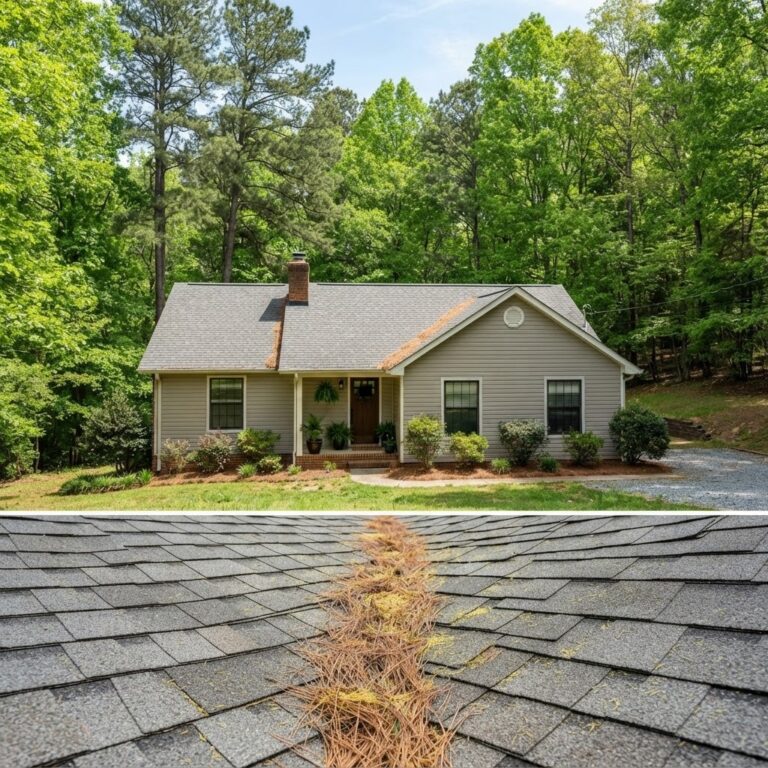
In North Carolina, pine trees are part of the neighborhood. They also leave pollen, needles and small branches on roofs, especially in spring and after windy weather. A little yellow dust is usually just a nuisance. A thick mat of debris sitting in a roof valley or packed against a chimney is different: it can slow drainage and keep moisture where you do not want it.
The practical answer is not to scrub the roof every time it turns yellow. Know what is normal, watch the places where debris collects, and keep your feet on the ground unless a qualified professional is doing the work.
Pollen is mostly a surface nuisance
Pine pollen can coat shingles, siding and cars in a bright yellow film. On most sloped roofs, weather and rain will move loose pollen along. A yellow roof is not, by itself, proof of damage or a reason to replace shingles. Nor is it the same thing as the dark streaking that can develop from algae growth.
Skip the pressure washer, stiff brush and improvised chemical treatment. High-pressure water can dislodge shingle granules or force water beneath roofing materials. Harsh cleaners may damage surfaces, landscaping or runoff areas. If a stain remains after ordinary weather, ask a roofing professional what it is before treating it.
Pine needles and branches need a closer look
Needles, cones and twig debris are more likely than pollen to cause a drainage problem. They can collect in roof valleys, behind chimneys, around skylights and near dormers. Those transitions already direct water across the roof. A pile that dams water or holds damp organic matter against shingles deserves attention.
After a windy day, look from the ground for obvious branches, debris in gutters, or material gathered in a valley. Do not climb a ladder to inspect a roof edge, and do not walk on shingles. A roof can be slippery even when it looks dry, and stepping on it can damage shingles or flashing.
Keep gutters and downspouts moving
Roof debris often ends up in the gutter. When a gutter is clogged, rain can spill over the edge, soak fascia and siding, or collect near the foundation. From the ground, check for visible overflow, sagging sections, plants growing in the gutter, or water stains below the roofline after rain. Make sure downspouts discharge away from the foundation.
Gutter cleaning can be hazardous. If you are not equipped and comfortable working safely from a ladder, hire someone who is. This is also a good time to check that branches are not rubbing on shingles or hanging over the roof. Have tree work done by an insured tree-care professional, not by pulling limbs from the roof yourself.
What to check after a storm
Wind can move branches, lift loose material and push debris into roof valleys. From the ground, look for a branch on the roof, a visibly displaced shingle, a damaged gutter, or debris near a roof opening. Indoors, watch for a new ceiling stain, damp attic insulation, or a musty smell. Do not enter an attic if you see sagging, active water near electrical equipment, or other unsafe conditions.
If you see a leak, protect belongings and avoid climbing onto the roof to patch it. Take photos from a safe location and note when the problem appeared. A roofer can inspect the roof and explain what needs attention. If there is significant structural damage or immediate danger, contact emergency services or the appropriate local authority first.
A simple seasonal routine
Once in spring, and again after major wind or rain, take a few minutes to scan the roofline from the yard. Check for accumulated debris in valleys, gutters that appear blocked, branches touching the roof, and signs of water inside the home. You do not need to inspect every shingle yourself. The goal is to notice a change early and arrange a safe inspection when something looks wrong.
Keep a record of what you observe. A few dated photos from the ground can help you compare conditions over time and explain the issue to a roofer. Avoid standing under a damaged limb or approaching a roof with visible sagging, exposed wiring or active leaks.
When a professional inspection makes sense
Call a roofer if debris is trapped somewhere you cannot see safely, if a leak appears, or if a storm leaves visible damage. Ask for a clear explanation of the findings and which work is necessary now versus optional maintenance. A reliable contractor should be able to show you what they found without manufacturing urgency.
MCSquared Roofing serves homeowners in the Triad, Burlington and Raleigh-Durham. We do not send salespeople to pressure you at the door. You can start with an online estimate, review transparent pricing, and decide whether an inspection makes sense. No pushy pitch, just useful information for making a sound decision.
Get an online roof estimate, or schedule an inspection using the calendar below.
